
Professional Kitchen Design: Technical Standards, Layout, and Essential Components


Table of Contents
Strategic Importance of Kitchen in the HoReCa Industry
A professional kitchen is not just a space for food preparation—it is a logistical center where proper planning and technical organization directly determine business success. This is especially true in the HoReCa sector, where speed, quality, and hygiene are equally important. Kitchen design becomes one of the most crucial factors for management.
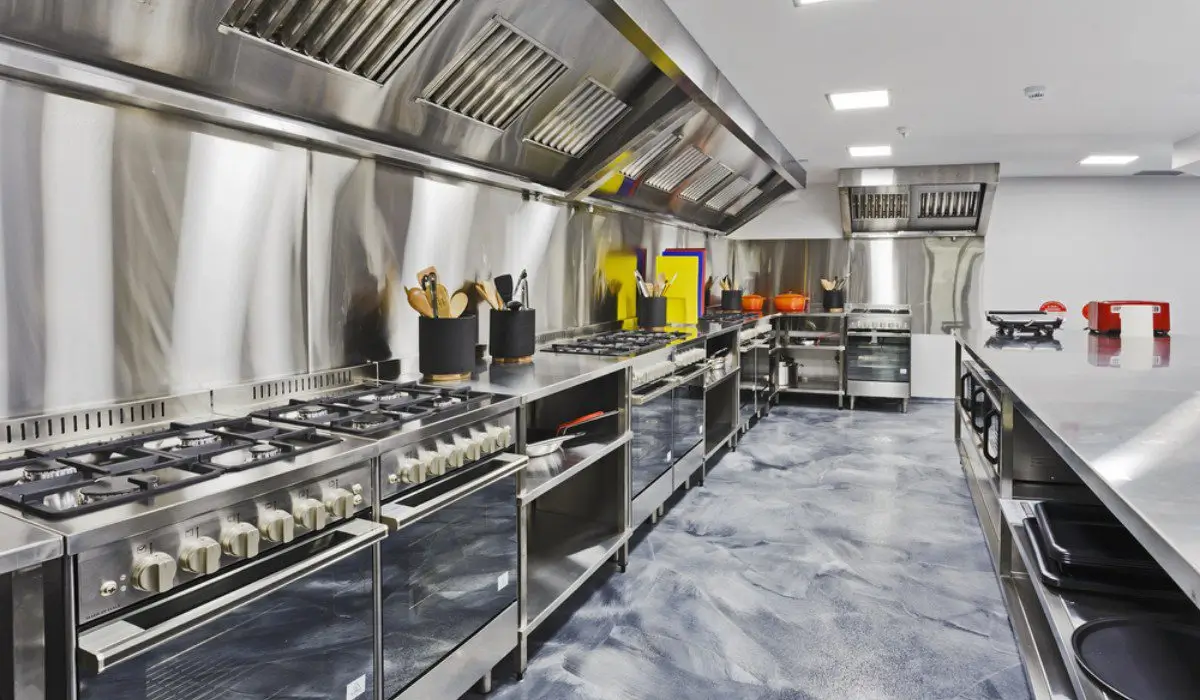
Initial Stages of Design
Needs Analysis – Customer and Menu Specifics
At the beginning of kitchen design, a comprehensive analysis is essential: what the establishment prepares, what volume of service it will have, and in what time intervals. A fast-food outlet has different requirements than a high-class restaurant. An in-depth menu analysis should determine technical resources, space utilization priorities, and operational flow dynamics.
Spatial Visualization and Space Division
A kitchen operates effectively when each section has a clearly defined function and is properly connected to others. Visualization allows for anticipating staff movement, equipment placement, and safety parameters. Modeling also plays an important role at this stage, reducing the risk of errors during implementation.
Workflow Planning
Logical Sequence of Processes (Receiving-Preparation-Serving)
Every stage in the kitchen is interconnected: from receiving products to processing, preparation, and finally serving. Any delay or intersection in this process causes slowdowns and productivity drops. Therefore, the process should be as linear as possible and rationally distributed.
Simplifying Movement and Effective Zone Combination
The internal organization of space affects not only the efficient use of time but also the physical workload of staff. Proper zoning reduces the need for movement, simplifies communication, and improves the working environment. Good planning means that staff doesn’t need to take extra steps for each operation.
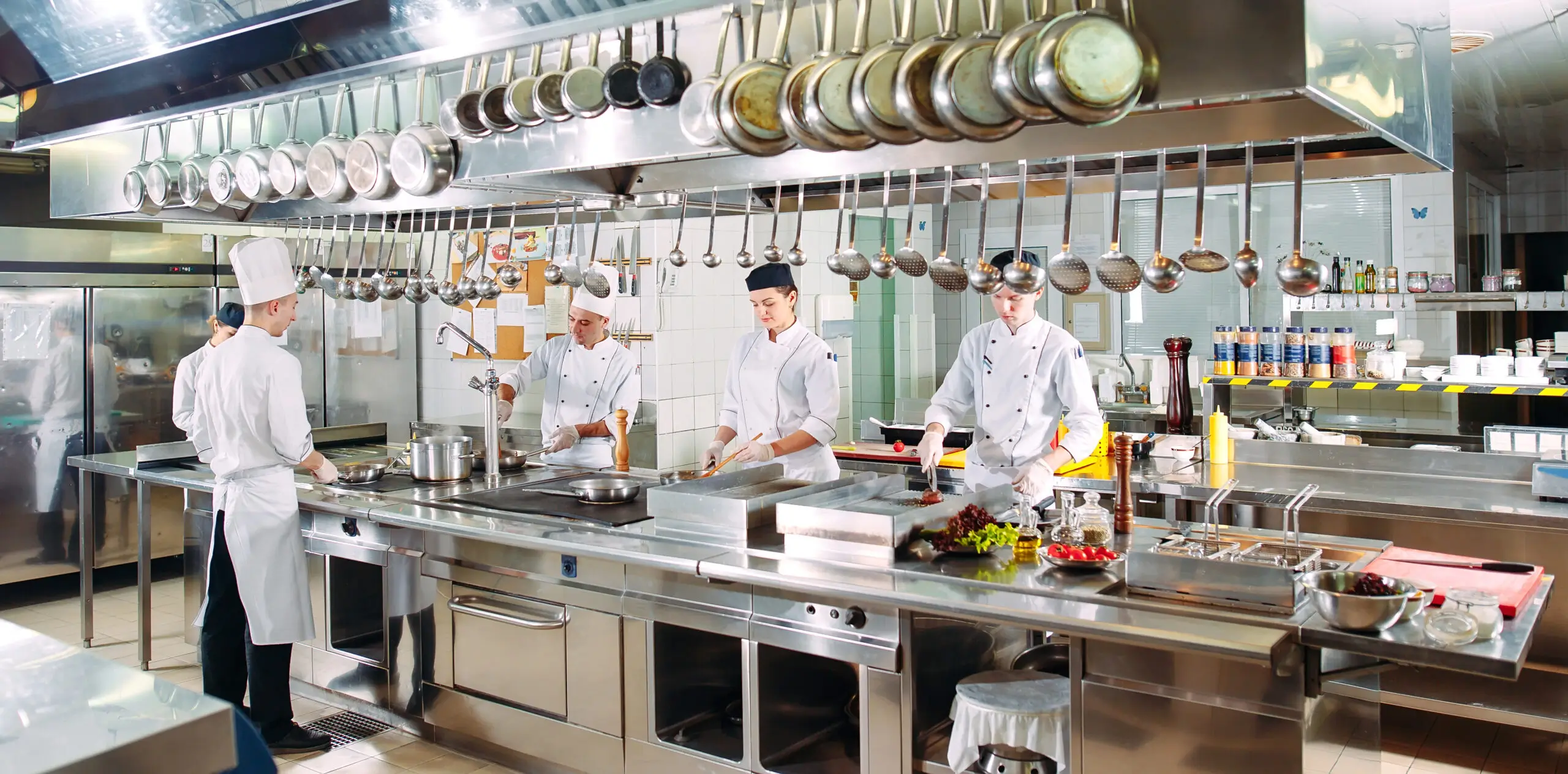
Technical Standards and Regulations
Hygienic and Sanitary Requirements
Adhering to sanitary standards for a food establishment is not just a regulatory issue, but also a matter of reputation. All surfaces should be easy to clean, all tools hygienic and safe. It’s important that the kitchen is adapted to HACCP system principles, which involve risk prediction and prevention.
Safety Regulations (Fire, Electricity, Gas)
The greatest dangers in the kitchen are related to fire, gas, and electricity. Therefore, it is necessary to consider all technical standards—from backup systems to appropriate sensors and fire-fighting equipment. Safety should be organically built into the project.
Selection and Placement of Essential Equipment
Thermal Equipment – Ovens, Stoves, Grills
Thermal equipment is the “engine” of the kitchen. Their selection should be based not only on the menu but also on operational intensity. Professional equipment is distinguished by its ability for long-term exploitation and high-temperature control capabilities.
Hygienic Zone and Dishwashing Systems
A well-organized washing zone is a guarantee of hygiene. It should have water purification systems, separate sections for plates and utensils, and be arranged so that clean and dirty flows do not intersect.
Refrigerators and Freezers – Temperature Control
Food storage and its safety are directly related to temperature maintenance. Different products require different types of storage—separate shelves for raw materials, ready-made food, vegetables, etc.
Multifunctional Equipment
Modern kitchens strive to maximize space utilization. This is aided by multifunctional equipment that combines several processes in one device. This reduces movement time and increases process flexibility.
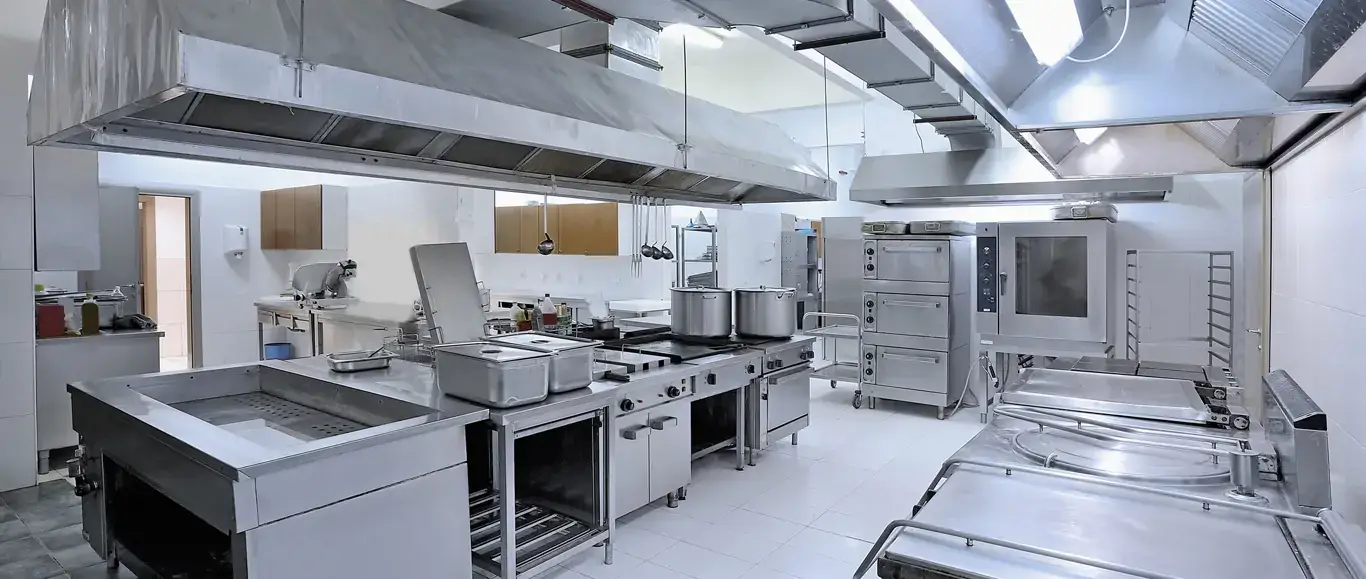
Work Surfaces and Table Ergonomics
Material Standards – Stainless Steel
Stainless steel represents the gold standard in professional kitchens. It is resistant to mechanical and chemical effects, does not rust, and is easy to clean. For these reasons, it is used on work surfaces, cabinets, and shelves.
Height and Length Calculation Based on Staff
Ergonomics determines not only comfort but also efficiency. The height and arrangement of tables should correspond to the physical characteristics of the staff. Improperly planned surfaces reduce productivity and increase the risk of fatigue.
Shelves, Pantries, and Inventory Storage
Wall-mounted Shelves – Quick Access
Shelves mounted on the wall not only save space but also speed up work. The fast pace of the kitchen requires that necessary items are always accessible. However, the stability and durability of the shelves are equally important.
Mobile Platforms and Carts – Flexibility in Processes
Mobile racks and carts gain particular importance when dealing with frequently changing work processes. They provide flexibility and reduce logistical delays.
Ventilation and Air Extraction Systems
Ceiling and Wall Extractors – Hot Air Management
Thermal zones produce high temperatures and steam, which must be promptly removed by extractors. A properly selected and installed system reduces heat accumulation, protects electrical equipment, and creates a healthy work environment.
Effective Control of Moisture and Odor
Air quality in the kitchen directly affects both the product and staff health. Air filters and dehumidifiers should work continuously, especially in facilities where there is insufficient natural ventilation.
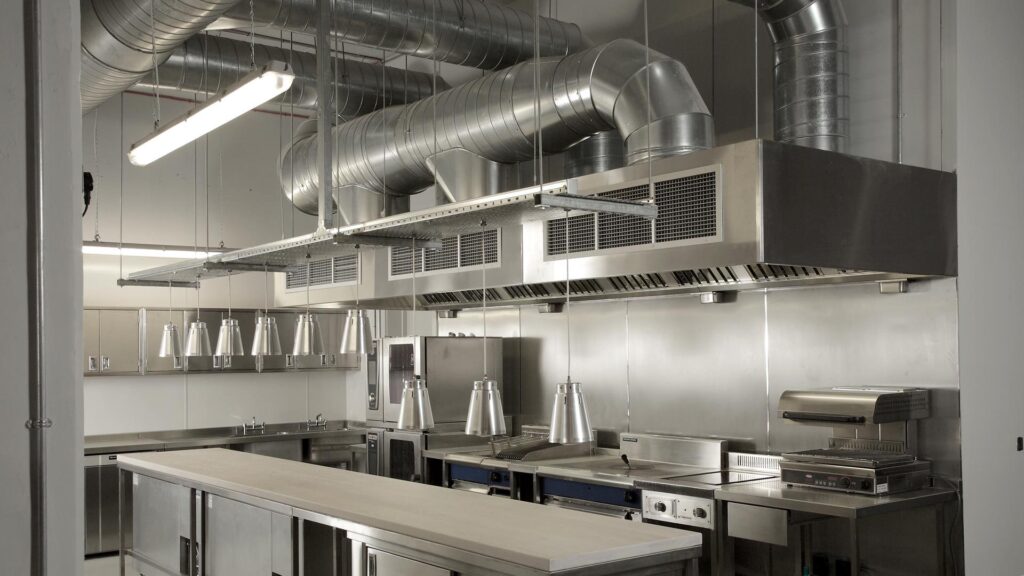
Sanitary Zones and Disinfection
Hand Washing Stations and Disinfection Corners
Cleaning corners should not be seen as just additional space—they are vitally important. They should have easy access, sufficient water supply, and constant provision of disinfectants.
Waste Management and Organization
Waste Separation – Solid and Liquid
Solid and liquid waste require different approaches. Their separation should occur at the point of origin to ensure efficient and clean subsequent removal and processing.
Rapid Waste Transfer and Temporary Storage
Waste should not accumulate in work areas. Containers placed in necessary locations and defined routes ensure quick transfer and do not violate sanitary rules.
Lighting and Technological Support
Local Lighting for Work Zones
General lighting is not sufficient for precise work processes. Plate decoration, product cutting, inspection—each stage requires targeted, local lighting.
Sensor and Automated Systems
A modern kitchen cannot be complete without automation. Sensor faucets, temperature control systems, and energy-efficient management reduce costs and increase accuracy.
Harmony of Design and Functionality
Visual Unity and Practicality
Even in a professional kitchen, design has its share of importance. The right colors, lighting, and materials create a space that doesn’t tire the staff and enhances the work mood.
Space Optimization and Comfort for Staff
An insufficiently planned space is not only unproductive but also increases the likelihood of conflicts and stress. A well-designed kitchen takes into account work frequency, workload, and staff comfort simultaneously.
Frequently Asked Questions (FAQ)
How to Choose Kitchen Equipment?
The decision should be based not only on brand or budget but on specific needs: product volume, menu type, and potential for future growth.
What Size should the Kitchen be for Different Establishments?
The size standard depends on the average number of customers, but the number of staff and the complexity of work flows should also be considered.
How to Maintain Sanitary Standards?
Functional division of the kitchen, regular disinfection, staff training, and constant quality monitoring are essential.
What Material is Recommended for Work Tables?
Stainless steel remains the number one choice, but high-strength plastic or stone certified for the food industry can also be used.
How should Ventilation be Arranged?
Independent extractors should be considered for temperature zones, which do not cause air mixing between clean and dirty areas.
What are the Benefits of Mobile Structures?
They simplify space reorganization under different load conditions and increase overall flexibility in process management.
Ultimately, the success of a professional kitchen is not just about the quantity of equipment or visual effect—it’s a balance of planning, functionality, safety, and staff comfort. A kitchen created with the right strategy works as a coordinated mechanism that produces quality, speed, and minimum dissatisfaction.