
Professional Mixers: Types and Their Purpose


In the professional food industry, where consistent product quality and production efficiency directly determine success, technological equipment plays a fundamental role. Among this equipment, professional mixers are one of the main tools. This device directly affects the consistency, texture, and quality of the final product – whether it’s airy cream, delicate biscuit, or perfectly kneaded dough. A properly selected mixer optimizes work processes and ensures compliance with the high standards that the modern market demands, for any size commercial kitchen – from bakeries to confectioneries, cafes and restaurants to large-scale production.
Table of Contents
The market offers two main types of mixers: planetary and spiral. Instead of only considering technical details, let’s focus on needs: do you need an ideal cream mixer, the best cake mixer, a multifunctional confectionery mixer, or a powerful dough mixer? This guide will help you understand which type of mixer best meets your requirements.
Planetary Mixer
The planetary mixer stands out for its versatility. Its operating principle – the attachment rotating on its own axis while simultaneously moving around the bowl’s perimeter – ensures complete and even mixing of ingredients at every point in the bowl. For this reason, it often fulfills several important roles:
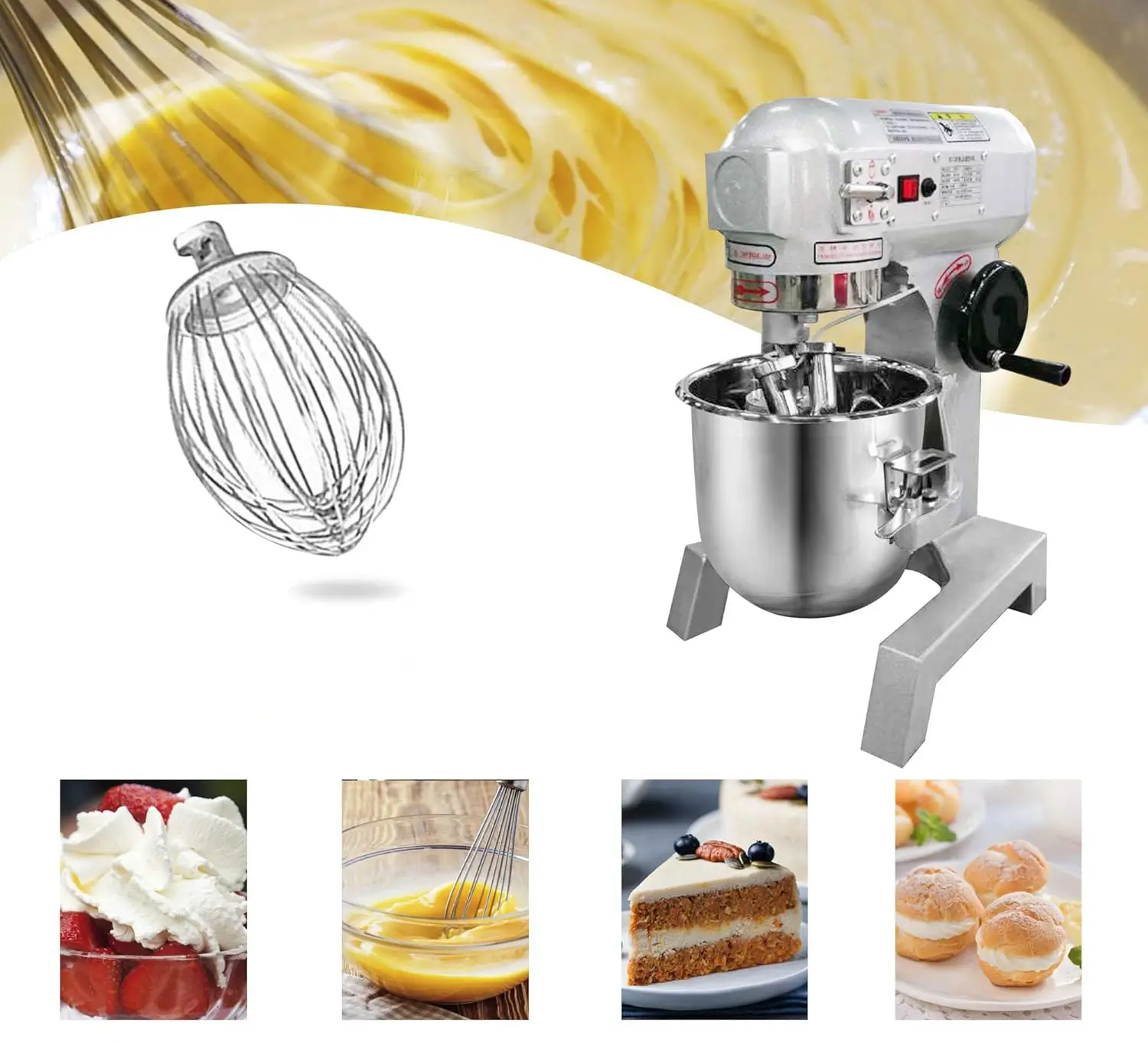
Cream Mixer: Creating Airy Textures
- Task: Maximum aeration of ingredients (air incorporation) to achieve fluffy creams, meringue, butter creams, and other airy masses.
- Main attachment: Whisk – its wire structure effectively whips and increases mass volume.
- Operating principle: Start at low speed to combine ingredients, then gradually increase to medium/high speed. Monitor the process to avoid over-whipping (e.g., cream turning to butter).
- Tips: Use a perfectly clean and grease-free bowl and whisk (especially when whipping egg whites). Speed control is essential.
- Considerations: Bowl size should match the portion size. Sufficient power ensures stable operation.
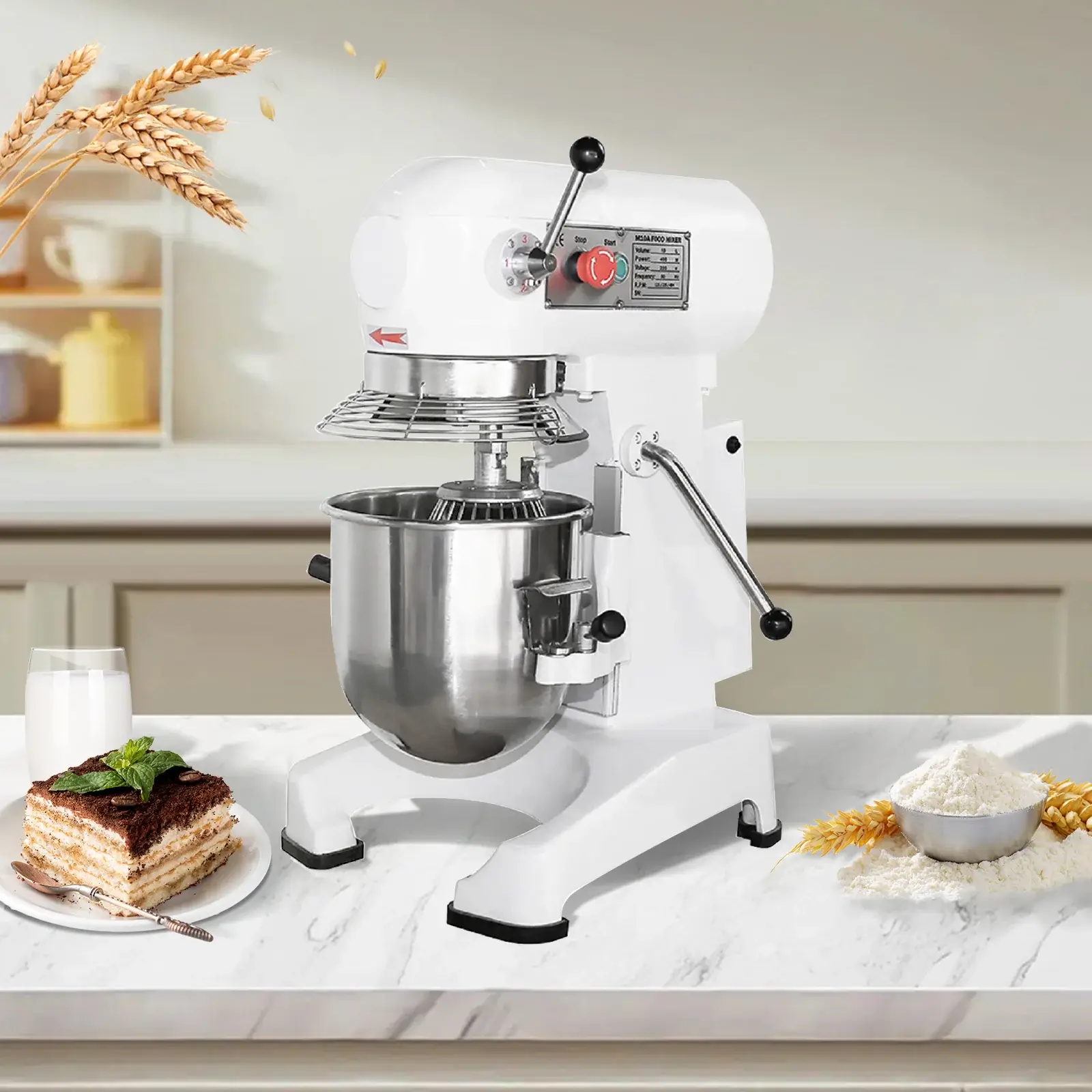
Cake Mixer: for Delicate Biscuits and Pastries
- Task: Perfect mixing of ingredients with minimal gluten development, ensuring delicate and fluffy texture for cakes and biscuits. Ideal for “creaming” (butter + sugar), incorporating eggs, and combining dry/wet ingredients.
- Main attachment: Paddle/Beater – optimal for mixing and moderate aeration.
- Operating principle: “Creaming” at medium speed. Adding eggs – one at a time, at low/medium speed. Mixing dry and wet ingredients – always at low speed, just until combined. Periodically scrape down bowl sides.
- Considerations: Speed control is essential. Convenient bowl shape facilitates ingredient mixing.
Confectionery Mixer: Universal Solution
- Task: Performing a wide range of confectionery tasks, such as preparing cookie dough, fillings, pastes, custards, and some types of soft dough (e.g., brioche in small quantities).
- Attachments used: As needed – paddle, whisk, dough hook.
- Operating principle: Depends on the recipe. Always use the appropriate attachment and speed (e.g., when adding flour – low speed).
- Considerations: Important to have different attachments and a sufficiently large bowl for various portion sizes.
Spiral mixer
The spiral mixer, unlike the planetary, is a highly specialized device designed for one, but most important task.
Dough Mixer: For Khinkali, Bread, Pizza, and Khachapuri Dough
- Task: Efficient and high-quality dough kneading, especially for bread, pizza, khachapuri, lavash, and other yeast-based doughs. Also ideal for preparing khinkali dough and other firm doughs. The goal is complete ingredient mixing and optimal gluten structure development, giving the dough elasticity and the best consistency.
- Mechanism and advantages: Synchronized rotation of the spiral hook and bowl ensures gentle but deep and even dough processing. This method reduces friction, so the dough heats up less during kneading (important for long fermentation). Ideal for both high and low hydration doughs and for processing large volumes.
- Operating principle: Often has two speeds. First (low) speed is used for combining ingredients. Second (high) speed – for intensive gluten development. Precise kneading time control (often with a timer) is essential.
- Considerations: Key parameters are maximum dough capacity (kg), motor power (HP), timer availability, and safety mechanisms. If your main activity is dough production, a spiral mixer is the best investment.
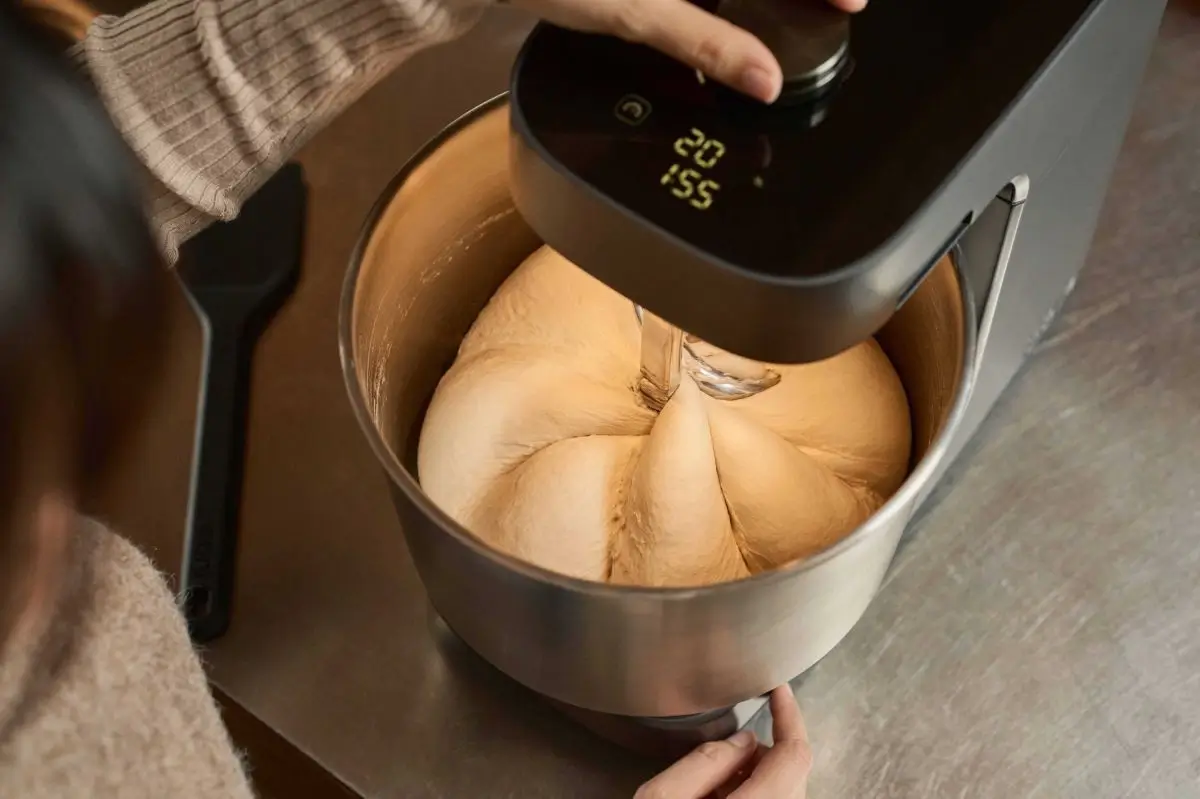
Planetary Mixer for Dough: Capabilities and Limitations
- Capability: A planetary mixer can knead dough using a dough hook.
- Efficiency: Works best on small portions and relatively soft doughs (e.g., brioche). Use low/medium speed.
- Limitations: Large volumes or stiff dough may overload the motor. Extended kneading sometimes heats the dough. It’s not as efficient for dough kneading as a spiral mixer, but it’s an acceptable option if you rarely make dough or in small quantities and need one multifunctional device.
Which Mixer to Choose? Planetary or Spiral?
The decision depends entirely on your specific needs and production profile:
Choose a planetary mixer if:
- Your main focus is bread, pizza, khachapuri, lavash, or other yeast-based doughs (bakery, pizzeria).
- You need to efficiently and professionally process large volumes of dough.
- Dough quality and optimal gluten development is your priority.
Choose a spiral mixer if:
- Your kitchen is diverse (confectionery, cafe, restaurant).
- You produce cakes, biscuits, creams, desserts.
- You rarely make dough or in small portions (mainly soft dough).
- You need one universal device for multiple functions.
Comparison Table: Planetary vs. Spiral Mixer
| Characteristic | Planetary Mixer | Spiral mixer |
|---|---|---|
| Mechanism | Planetary movement, interchangeable attachments | Rotating spiral hook and bowl |
| Main Strength | Multifunctionality (whipping, mixing, kneading) | Dough kneading (especially large volumes) |
| Dough Work | Small/medium, for soft dough | All types, for large volumes, for dense dough |
| Cream/Cake Work | Ideal | Not used |
| Versatility | Very high | Low (dough-focused) |
| Ideal for: | Confectioneries, cafes, restaurants | Bakeries, pizzerias, khinkali production |
Investment in Quality and Efficiency
Choosing the right professional mixer is not simply purchasing equipment – it’s an investment in your business efficiency and stable product quality. Analyze your production volume and assortment, evaluate which processes are priority for you (whipping, mixing, or kneading) and accordingly select the mixer –